I spent three years studying art history in secondary school. I can still tell you about Botticelli’s Venus rising from the sea, Titian’s reclining Venus of Urbino, and Delacroix’s Liberty Leading the People with her bare breast exposed as she charges forward with the French flag. We studied Michelangelo’s David in all his naked glory, the Sistine Chapel ceiling filled with nude figures, countless paintings where the human body was on full display.
Nudity has always been part of art history. Both male and female bodies, portrayed without shame or hesitation. Breasts for women, penises for men. This was considered essential study, part of understanding the human form, artistic technique, and cultural history.
But here’s what I never studied: a single image of a woman breastfeeding.
Not one.
It wasn’t until I started working on Milk Tales, my book of portraits and stories about the struggles of breastfeeding, that I went searching through breastfeeding in art history. As I thought about the kind of photographs I wanted to create, the emotions I wanted to evoke, the ethical considerations of portraying such intimate moments, I found myself turning to art history for guidance.
And that’s when I discovered something surprising. Images of breastfeeding mothers exist throughout art history. More than I ever would have expected. Paintings, sculptures, drawings spanning centuries and cultures. Someone, across all these different eras, took the time to document this moment, to capture it as a normal phenomenon that has always been part of motherhood.
So why had I never seen them? Why weren’t they part of my education, sitting right alongside all those other images of the female form?
I was 16 to 18 during those art history classes, certainly mature enough to understand the human body. We could study David’s genitals and the naked figures sprawling across the Sistine Chapel. We could examine Venus after Venus, breasts bare and bodies on display. So why not a mother feeding her child?
I understand we focused on the most famous, most recognizable works. But some of these breastfeeding images were created by renowned artists too. Cézanne. Tintoretto. Masters whose other works filled our textbooks. Yet these particular paintings remained invisible, tucked away in the archives of art history as if they didn’t quite belong alongside the “important” art.
I’m sure art scholars and experts are well versed in this theme throughout art history. This is simply my experience, my journey of discovery. But I wonder how many other people, like me, went through years of art education without encountering a single image of breastfeeding. How many mothers who might have felt less alone in their struggles if they’d known these images existed.
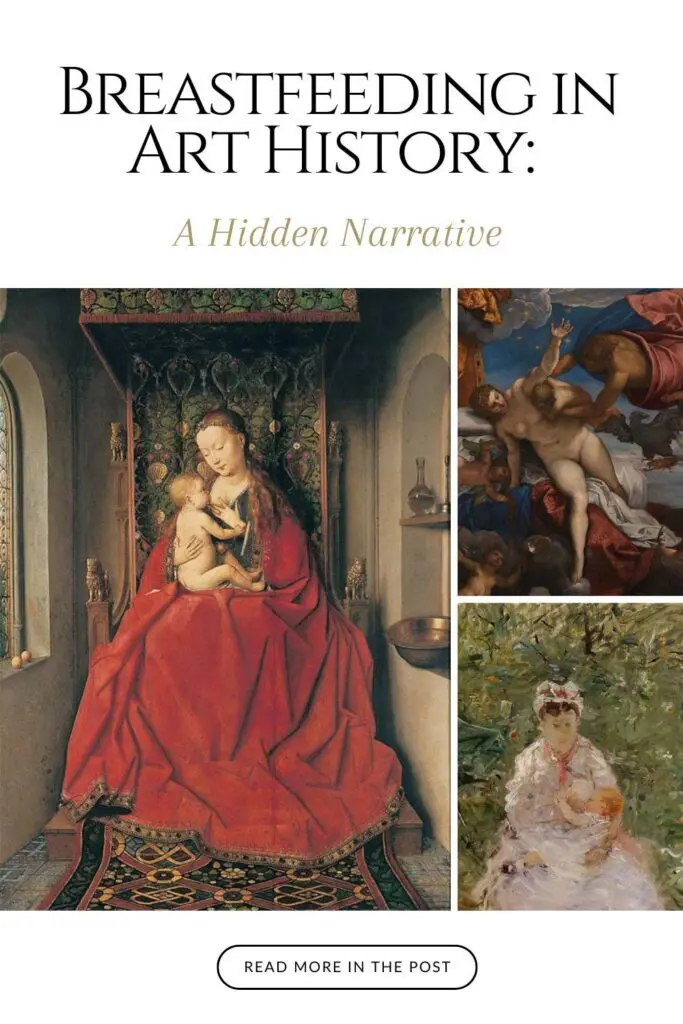
The Breast We See vs The Breast We Don’t
The female breast has always been a subject in art. We see it symbolising fertility in ancient sculptures, divinity in religious paintings, eroticism in Renaissance masterpieces, and revolutionary power in political art. The breast as symbol, as object, as ideal.
But the breast as function? The breast actually feeding a child? That’s a different story.
Think about the images of breasts that live in our collective memory. They’re usually detached from the messy, beautiful reality of motherhood. They exist to be looked at, not to nourish. They represent something abstract rather than something deeply, practically human.
When I was pregnant with my daughter 14 years ago, I had absorbed all these cultural messages about the female body without ever really seeing what my body was actually about to do. No wonder breastfeeding felt like such a shock when it turned out to be painful, difficult, and nothing like the “natural and easy” experience everyone promised.
A Hidden Gallery: Breastfeeding in Art History
Sacred Beginnings: Early Religious Art
Once I started looking, I found them everywhere. And some of the earliest examples took my breath away.
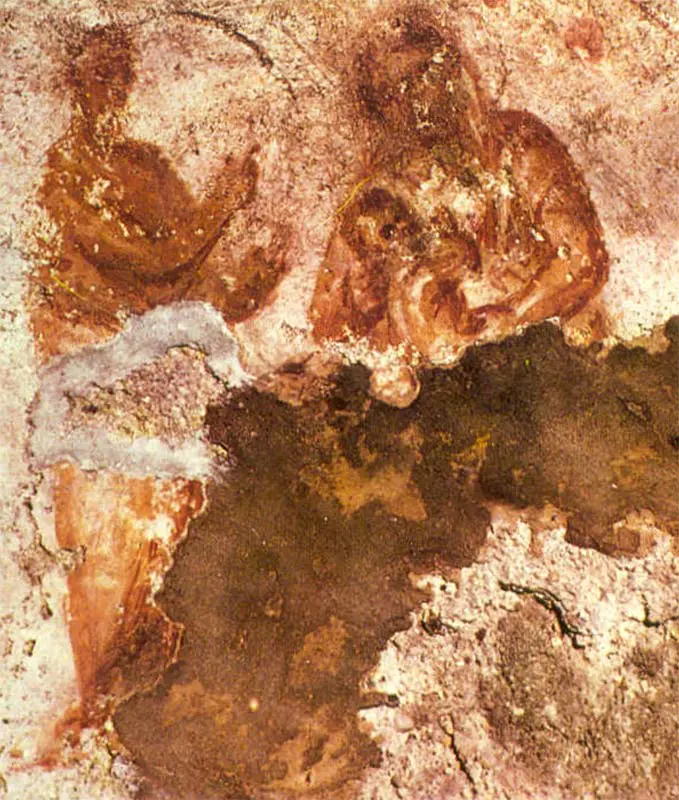
In the Catacomb of Priscilla in Rome, there’s a fresco from around the 3rd century showing Mary nursing Jesus. It’s damaged, worn by time, but the image is still visible. A mother feeding her child, painted nearly 1,800 years ago in an underground burial chamber. Think about that. Even in the earliest days of Christian art, someone thought this moment was sacred enough, important enough, to preserve on a wall where the faithful would see it.
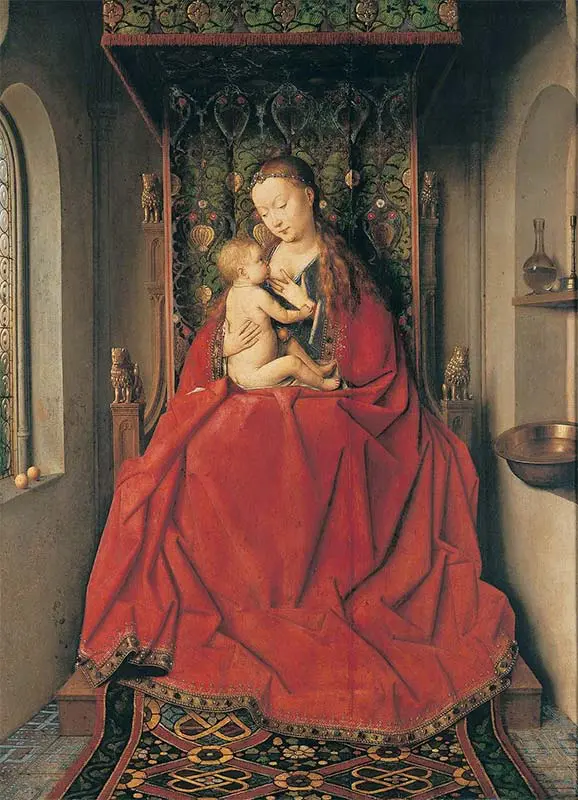
Jan van Eyck’s Lucca Madonna from 1437 shows Mary nursing Jesus with incredible detail and tenderness. The intimacy of the scene, the way Mary cradles her child, the domestic setting – it’s a reminder that even the mother of God had to feed her baby.
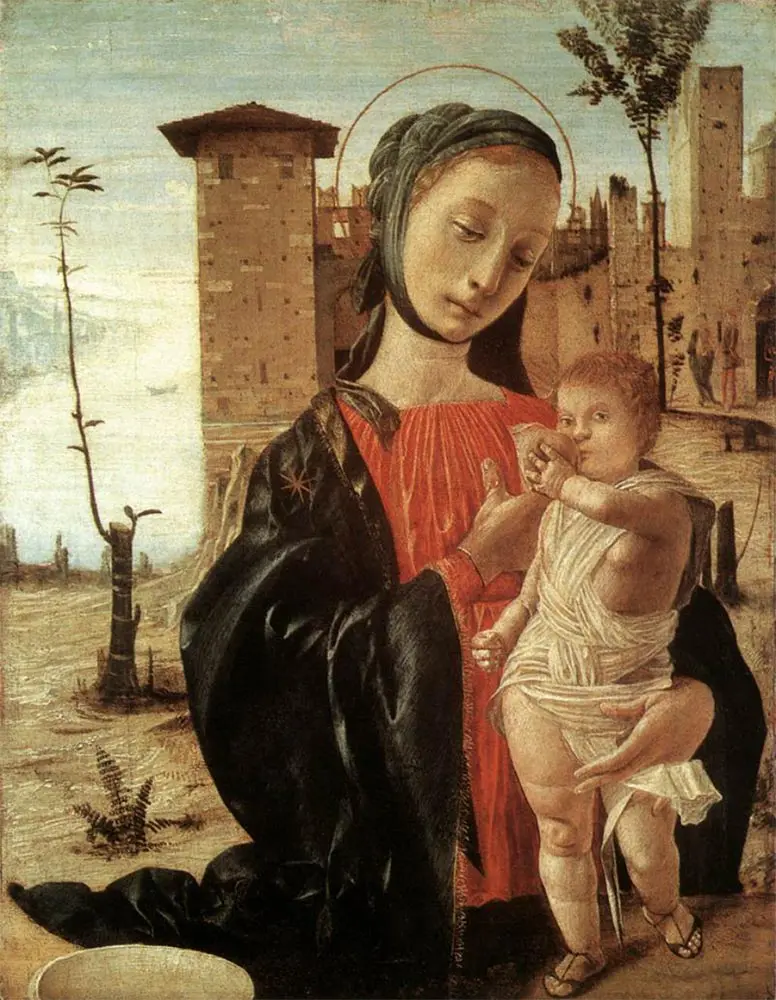
Bramantino’s Madonna del Latte from 1490 is another beautiful example of this genre known as Madonna Lactans, which was surprisingly common in medieval and Renaissance art. These weren’t hidden away or considered scandalous. They were devotional images, created for churches and private prayer. The nursing breast was holy.
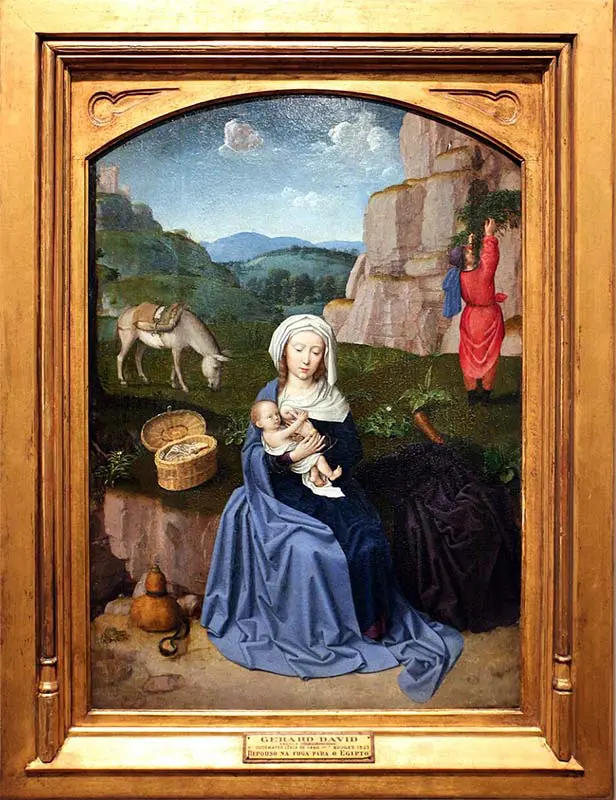
Gerard David’s Riposo durante la Fuga in Egitto (Rest During the Flight to Egypt) shows Mary nursing Jesus while they flee to Egypt. Even in crisis, even while escaping danger, a baby still needs to feed. It’s such a human detail in a biblical story.
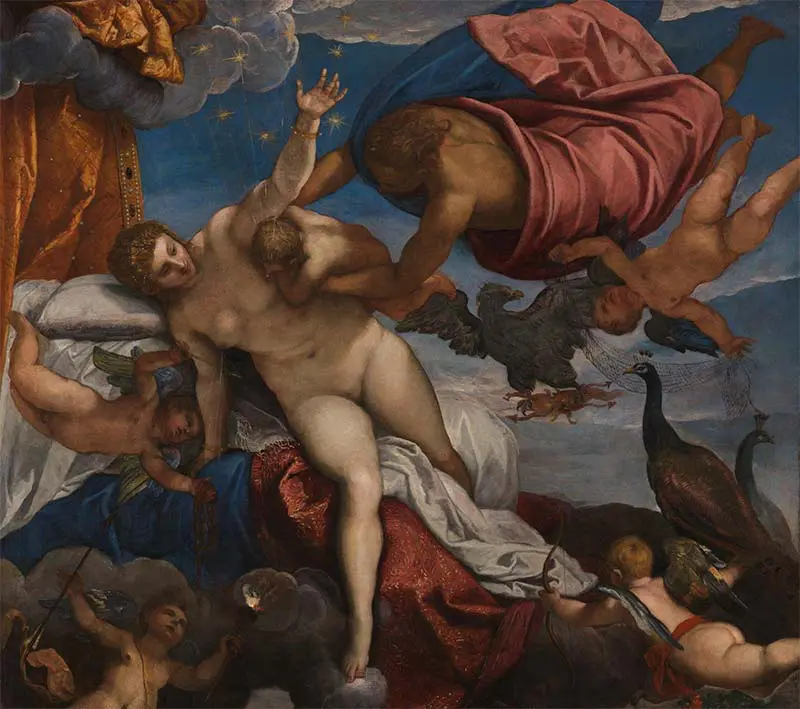
And I have to mention Tintoretto’s The Origin of the Milky Way because, well, milk. According to the myth, the Milky Way was created when Hera’s breast milk sprayed across the sky. Even our galaxy has a breastfeeding origin story.
From Impressionism to Everyday Life
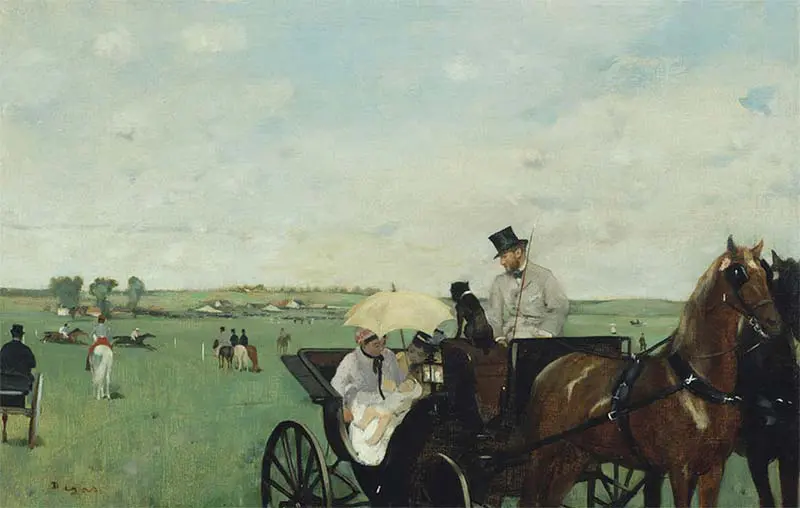
Fast forward to the 19th century, and breastfeeding appears in Impressionist paintings, though not as a common theme. What’s fascinating is how artists like Degas, Renoir, and Morisot approached it, giving us insight into how women who nursed were perceived during that era.
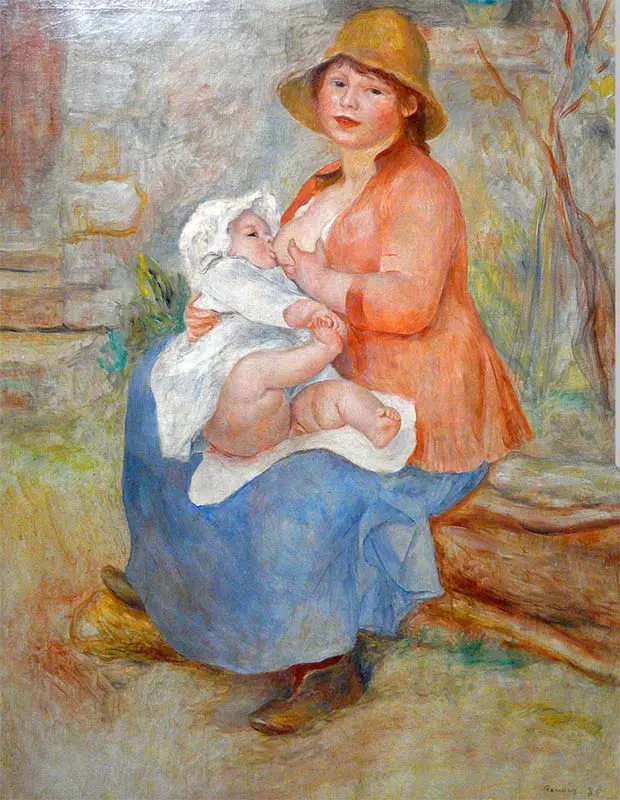
Pierre-Auguste Renoir’s Maternité from 1885 shows Madame Renoir nursing their son, Pierre. It’s intimate and tender, capturing a private moment with the soft, hazy light that Impressionism is known for.
Edgar Degas’ At the Races in the Countryside from 1869 includes a nursing mother in an outdoor scene, showing breastfeeding as part of everyday life, even in social settings.
But perhaps most intriguing is Berthe Morisot’s The Wet Nurse Angèle feeding Julie Manet from 1880. This brings us to another truth about breastfeeding in art history: the practice of wet-nursing. In 19th century Europe, wet-nursing (where women were paid to nurse someone else’s child) was widely practised. It reveals the reality about women, work, and money that we rarely discuss when we romanticise historical motherhood.
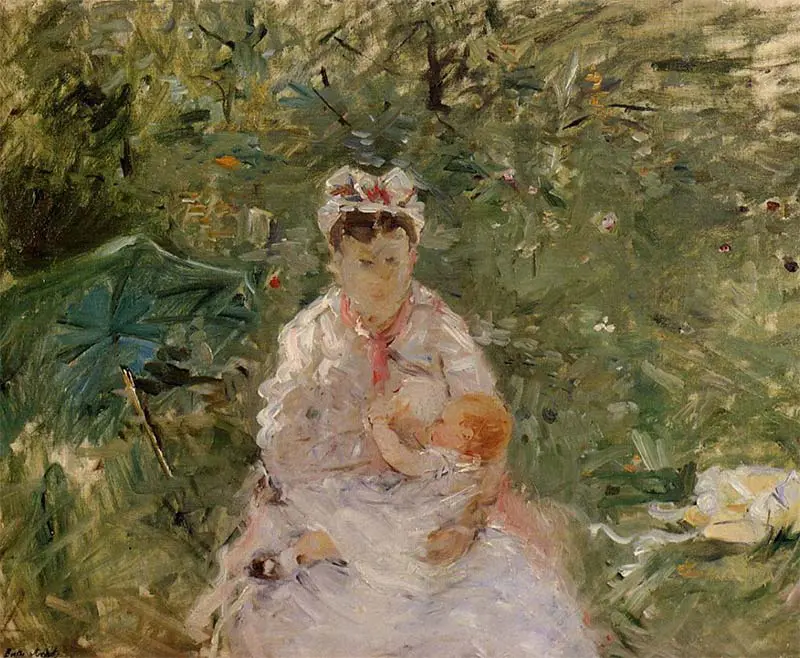
These Impressionist works show us that breastfeeding wasn’t just a private maternal act. It was also labour, a service, something tied to class and economics. The wet nurse paintings remind us that not all women could nurse their own children, and some women nursed other people’s babies out of financial necessity.
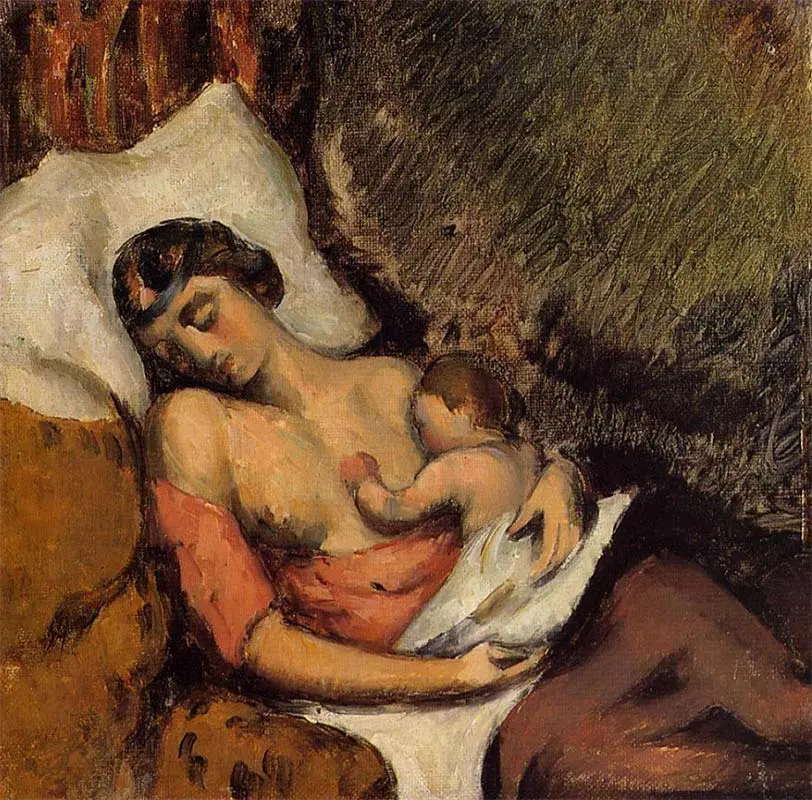
Paul Cézanne’s Hortense Breast Feeding Paul from 1872 is an intimate domestic scene of his wife nursing their son. There’s something so tender and ordinary about it. No grand symbolism, just a quiet moment in their home.
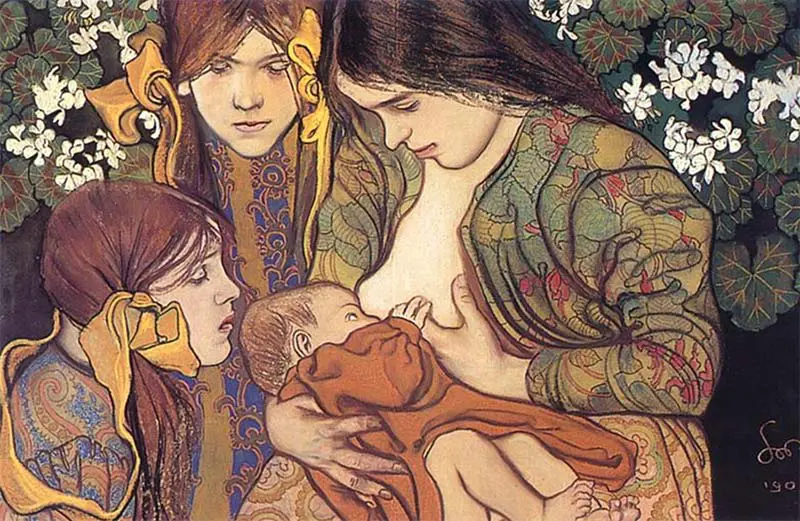
Stanisław Wyspiański’s Motherhood from 1905 captures that absorbed, almost trance-like state of nursing. If you’ve ever breastfed, you know that look, that elsewhere quality of being completely present with your baby while also somewhere else entirely.
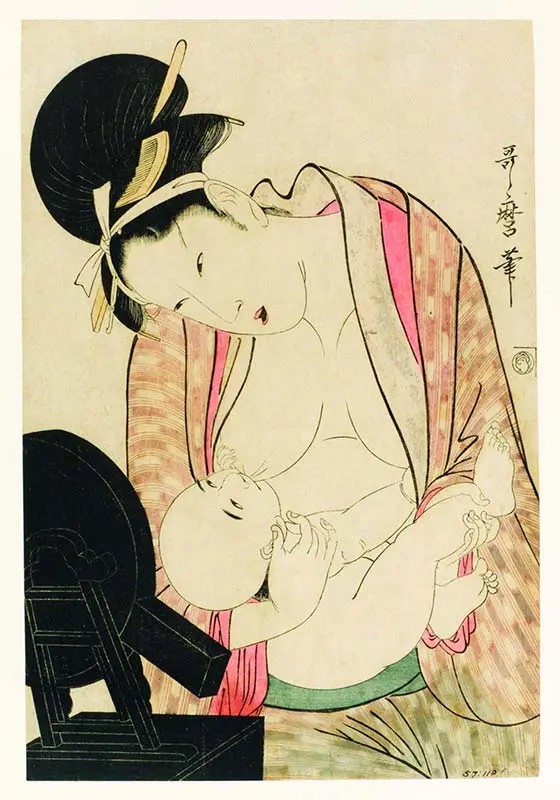
Then there’s Kitagawa Utamaro II’s Mother Nursing Child from 1801, a beautiful Japanese woodblock print that shows breastfeeding as part of everyday life, woven into the fabric of the domestic world.
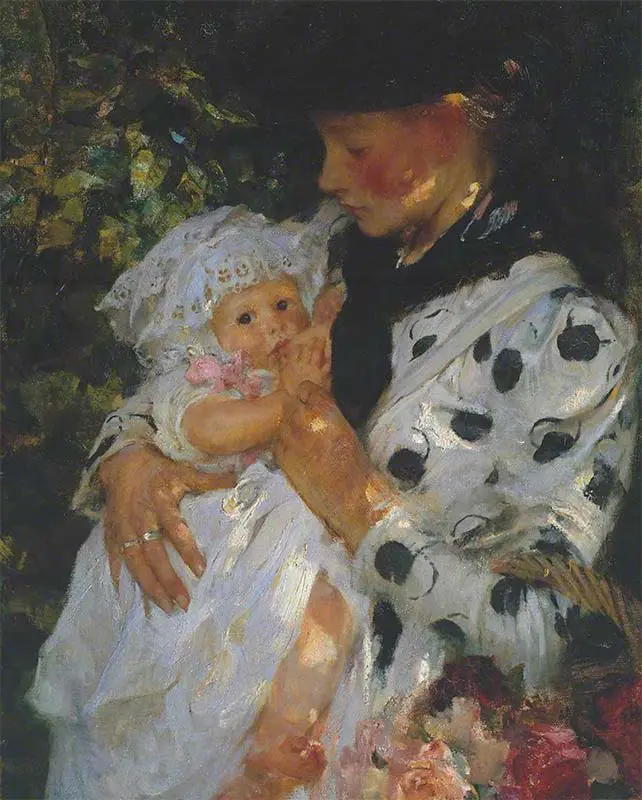
Even The Flower Girl by Sir James Jebusa Shannon 1900 depicts an ordinary working flower seller nursing her baby emphasising the close bond between nursing mother and baby.
These images span centuries, continents, and artistic movements. Breastfeeding in public spaces, in private moments, during flight, during rest. With other people present, in solitude. As sacred act, as ordinary routine. This rich tradition of breastfeeding in art history has been there all along, waiting to be rediscovered.
Why We Need to See These Images
Here’s what struck me most while exploring breastfeeding in art history: breastfeeding has been documented throughout history as a normal part of life. Artists took the time to observe it, capture it, preserve it. And yet somehow, in our modern world, we’ve made it invisible.
We don’t see breastfeeding mothers in our daily lives the way people did throughout history. We don’t see them in our art history classes. We don’t see them casually included in contemporary art or photography the way we see every other aspect of human experience.
And when mothers struggle with breastfeeding today, as I did 14 years ago and as the women in my book Milk Tales did, we feel alone. We feel like failures because it’s supposed to be “natural.” But natural doesn’t mean easy. It never has.
Visual images are powerful because they transcend language. You don’t need to speak Italian to understand Bramantino’s painting or Japanese to feel the emotion in Utamaro’s print. A mother in 1490 and a mother in 2026 can look at the same image and recognise themselves in it.
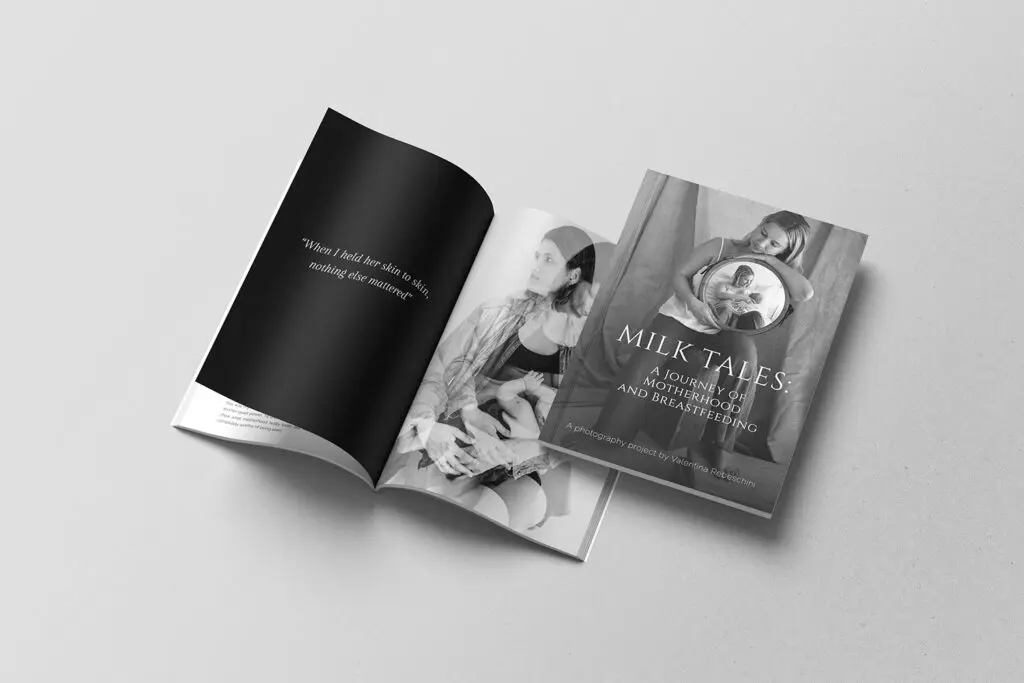
That’s what I wanted to create with Milk Tales. Modern documentation of what breastfeeding actually looks like, what it actually feels like, continuing a tradition that artists have been contributing to for centuries. When the women I photographed saw their images, many of them cried. Not because the photos were sad, but because they saw themselves reflected.
What Happened to Breastfeeding in Our Visual Culture?
Somewhere along the way, we separated the breast into two categories: the acceptable breast (decorative, symbolic, sexual) and the uncomfortable breast (functional, maternal, feeding). One gets celebrated in museums and advertising. The other gets hidden away, covered up, or relegated mostly to “private spaces.” (There are some breastfeeding portraits in museums, but not many).
I always loved art as a subject in school. I found it fascinating how much you could learn starting from a single painting. About history, culture, values, daily life. But the absence of breastfeeding images in my education taught me something too, though I didn’t realise it at the time. It taught me that this aspect of motherhood wasn’t important enough to study, wasn’t significant enough to remember.
As I’ve been discovering these historical artworks, I keep wondering how many other women have no idea they exist. How many mothers might feel that same connection between past and present if they saw them? The realisation that mothers have always struggled, always persevered, always been worthy of being documented.
In my previous posts about Why I wrote my breastfeeding book and What Milk Tales revealed about breastfeeding and mental health, I talked about the isolation and guilt that mothers carry. But there’s also something about visual erasure that compounds that loneliness. When you don’t see yourself reflected anywhere, when your experience seems to exist outside of cultural memory, it’s easy to believe you’re the only one.
Reclaiming the Image
What I love about discovering these artworks is realising that the artistic documentation of breastfeeding never actually stopped. It just got overlooked, undervalued, pushed to the margins of art history.
Contemporary photographers and artists are now reclaiming this tradition, making breastfeeding visible again. Not as something shocking or controversial, but as these historical artists did: as a fundamental part of human life worthy of artistic attention.
Every time I photograph a mother nursing her baby, I think about that long line of artists before me. Cézanne watching his wife with their son. Wyspiański capturing that absorbed maternal gaze. Unknown artists throughout history who thought this moment mattered enough to preserve.
They were right. It does matter.
Because when a struggling mother sees an image of breastfeeding, whether it’s a 16th century Madonna or a contemporary portrait from Milk Tales, something shifts. She’s not alone in time. She’s part of a continuum of mothers stretching back through history, all doing their best, all worthy of being seen.
The images remind us: this has always been hard. This has always been beautiful. This has always been worth documenting.
And maybe most importantly: you’ve always belonged in the frame.
This exploration through art history has reminded me why I created Milk Tales in the first place. We need to see ourselves reflected, in Renaissance paintings, in contemporary portraits, in each other’s stories. Every image, whether painted centuries ago or photographed today, is a reminder: you’ve always belonged in the frame.
If you’d like to see how I’m continuing this tradition of documenting breastfeeding honestly, and dive deeper into modern stories of the struggles, the beauty, and the truth, you can explore Milk Tales here.
Transparency note: This is an affiliate link. Your purchase supports my work at no extra cost to you.